The Custom Engineer's Guide to Washdown & Clean Environment Material Handling Solutions
Learn why standard material handling equipment may not meet the demands of sanitary environments—and how application-driven engineering can deliver durable solutions designed around your cleaning process, workflow and facility requirements.
Key Takeaways for Operations & Engineering Leaders
-
Why Standard Lifters May Not Be Suitable: Conventional equipment may include stitch welds, open channels, painted surfaces, or other features that can trap moisture, complicate cleaning, and deteriorate under demanding sanitation routines.
-
Application-Driven Design: Depending on the application, RonI can incorporate features such as continuous welds, smooth and accessible surfaces, enclosed components, corrosion-resistant materials, and custom end effectors designed around the load, cleaning process, and available space.
-
Using IP65-Rated Components: RonI can incorporate IP65-rated components to help protect against dust and water exposure in demanding cleaning environments. The appropriate equipment configuration depends on the application, sanitation process, and level of exposure.
-
Total Cost of Ownership: A purpose-built material handling solution can help reduce cleaning challenges, unplanned downtime, contamination risks, maintenance requirements, and premature equipment replacement. The potential return depends on the application, production environment, and current handling process.
The High Cost of the "Standard" Lifter Fallacy
In high-throughput food & beverage processing, pharmaceutical, and chemical manufacturing environments, material handling equipment can have a significant effect on sanitation, uptime, and overall workflow. However, its suitability for the cleaning environment may not be fully considered until maintenance, sanitation, or operational issues arise.
When selecting lifting equipment, operations engineers, quality assurance managers, and facility maintenance leaders may initially focus on capacity, dimensions, mobility, and price. A standard mobile lifter, epoxy-coated model, or painted carbon-steel frame may appear suitable based on basic performance requirements. However, the cleaning process, material compatibility, component protection, and equipment shape can be equally important in demanding sanitary environments.
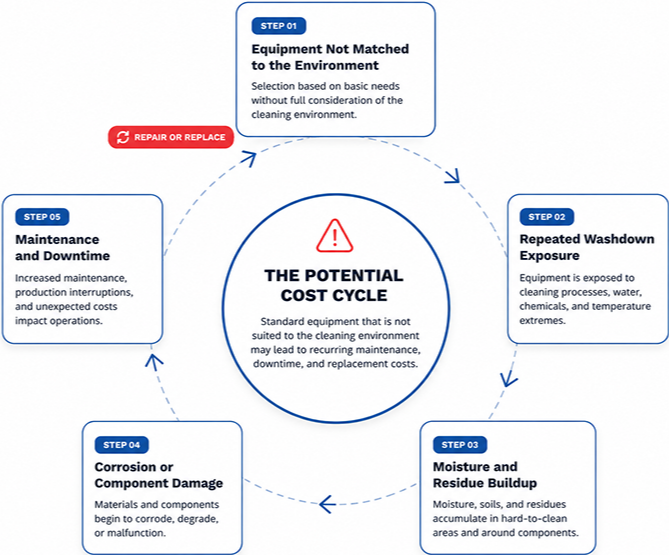
When general-purpose equipment is used in an environment with demanding sanitation requirements, repeated exposure to water, cleaning chemicals, and temperature changes can affect its cleanability, durability, and long-term performance. Potential concerns may include:
- Moisture and Residue Accumulation: Hollow frames, open channels, stitch welds, exposed threads, and other difficult-to-access areas may retain moisture or residue and make effective cleaning more challenging.
- Corrosion and Material Degradation: Painted surfaces, carbon-steel components, plated hardware, and other materials not selected for the cleaning environment may deteriorate over time when exposed to repeated washdown and sanitation chemicals.
- Electrical and Mechanical Exposure: Enclosures, controls, motors, and battery components that are not adequately protected may be vulnerable to moisture intrusion, which can contribute to intermittent operation, maintenance needs, or premature component wear.
- Operational and Ergonomic Impact: Corrosion, residue buildup, or component wear may affect caster movement, lifting performance, positioning, and overall ease of use, potentially increasing operator effort and disrupting workflow.
To reduce these risks, equipment selection should consider the cleaning process, chemical exposure, operating environment, load requirements, and workflow from the beginning of the engineering process.
The Washdown Challenge: Standard Equipment vs. Application-Driven Design
When evaluating material handling systems for washdown environments, it is important to distinguish between standard equipment adapted for a cleaning environment and equipment engineered around the application from the start. Protective covers, gaskets, coatings, and other modifications may improve resistance to moisture and cleaning exposure. However, the overall suitability of the equipment also depends on its materials, design, component protection, cleanability, sanitation process, and operating requirements.
An application-driven approach considers these factors early in the design process, allowing the equipment configuration to be developed around the load, workflow, available space, cleaning methods, and level of exposure.
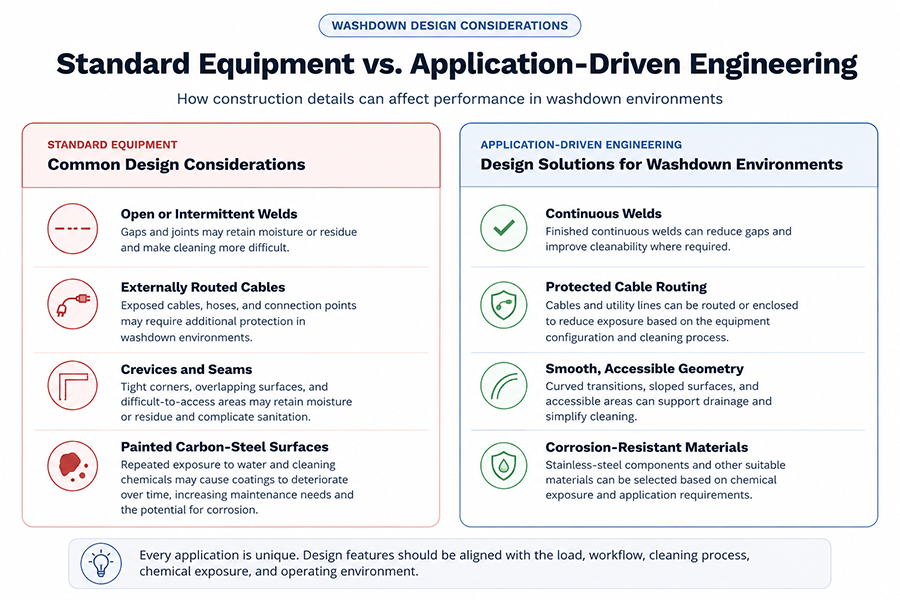
These construction considerations help inform how RonI configures equipment for the cleaning process, load, workflow, and operating environment.
Application-Driven Engineering Principles
RonI’s application-driven approach begins with the specific demands of the processing environment. Rather than selecting equipment based only on standard specifications, the configuration is developed around the load, workflow, available space, cleaning process, and level of exposure.
- Cleanable Design: Depending on the application, frames and surfaces can incorporate sloped, curved, or accessible design to support drainage and simplify cleaning. Difficult-to-access horizontal surfaces are minimized where practical.
- Continuous Welded Construction: Where required, continuous finished welds can reduce gaps and improve cleanability. Open tube ends and overlapping surfaces can also be minimized or sealed based on the design.
- Material Compatibility: Materials such as stainless steel, anodized aluminum, seals, finishes, and hardware can be selected based on the cleaning agents, exposure level, sanitation process, and application requirements.
- Protected Utility Routing: Wiring, control lines, hoses, and mechanical components can be routed or enclosed to reduce exposure and simplify cleaning.
Understanding IP65-Rated Components
In wet or washdown environments, certain electrical and mechanical components may require protection from dust and water exposure. RonI can incorporate IP65-rated components where appropriate based on the cleaning process, equipment configuration, and level of exposure. An IP rating applies to the specific rated component and should not be interpreted as a rating for the complete lifter unless the full system has been tested and certified accordingly.
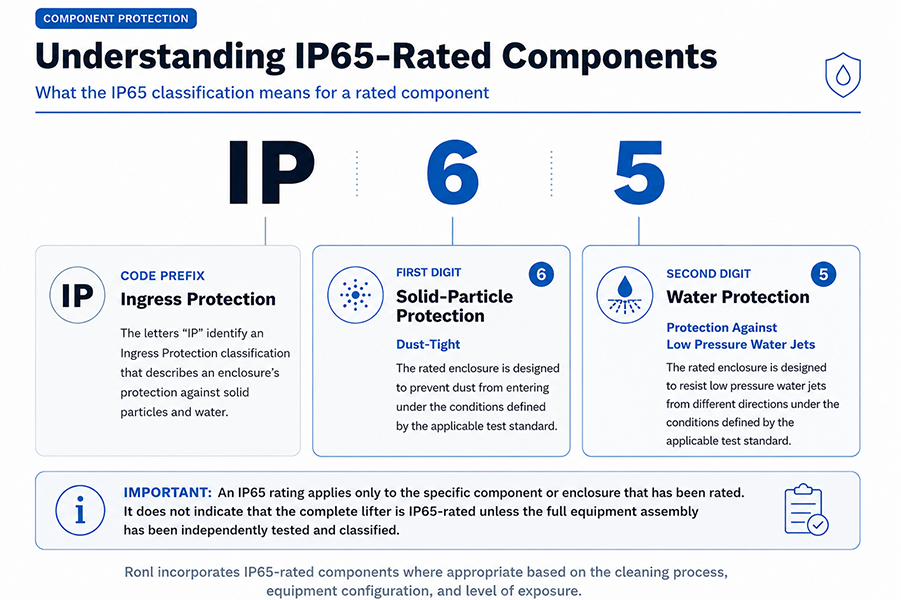
Speak with a RonI sales engineer to review your cleaning process, level of exposure, load requirements, workflow, and component-protection needs.
Industry-Specific Deep Dives: Engineering for Strict Regulatory Standards
Each industry presents different workflow, sanitation, material, and facility requirements. RonI reviews the application and configures the equipment around the customer’s operational needs and internal cleaning procedures.
- Facility Requirements: Food and beverage facilities may follow a range of regulatory, customer-specific, and internal sanitation requirements. RonI reviews the requirements identified by the customer when developing the proposed equipment configuration.
- Cleaning Environment: Cleaning methods can range from controlled wipe-down procedures to repeated washdown using water and approved cleaning agents.
- Equipment Configuration: Depending on the application, available options may include corrosion-resistant materials, cleanable design, protected components, and custom end effectors developed around the load and workflow.
Equipment configurations are application-specific. References to industry requirements do not indicate that RonI equipment is certified or approved to a particular regulatory or sanitary-design standard.
- Controlled-Environment Requirements: Pharmaceutical facilities may follow a range of regulatory, controlled-environment, internal quality, and customer-specific requirements. RonI reviews the requirements identified by the customer when developing the equipment configuration.
- Cleaning and Material Compatibility: Equipment may be exposed to frequent wipe-down procedures and facility-approved cleaning agents. Materials, seals, finishes, controls, and components should be selected based on the customer’s cleaning process and level of exposure./li>
- Application-Specific Design: Depending on the application, RonI can consider corrosion-resistant materials, cleanable and accessible surfaces, protected controls and components, non-marking caster options, and custom tooling developed around the load and workflow.
Equipment configurations are application-specific. References to industry practices or facility requirements do not indicate that RonI equipment is certified or approved to a particular standard.
- Chemical and Environmental Exposure: Chemical-processing applications may involve corrosive substances, cleaning agents, powders, moisture, or other challenging operating conditions. RonI reviews the materials and exposure information provided by the customer when developing the equipment configuration.
- Material Compatibility: Depending on the application, stainless steel, anodized aluminum, coated materials, seals, casters, and other components can be selected based on the chemicals, concentration, exposure duration, and cleaning process.
- Application-Specific Configuration: Equipment can be developed around the load, workflow, available space, handling method, and facility requirements identified by the customer.
Customers must identify any hazardous-location requirements. RonI equipment is not considered approved for classified environments unless the specific configuration has been formally evaluated and documented.
Anatomy of an Application-Driven RonI Washdown Lifter
RonI washdown lifters use an application-driven, modular design approach. Components and subassemblies are selected and configured around the load, workflow, operating environment, cleaning process, and facility requirements identified by the customer.
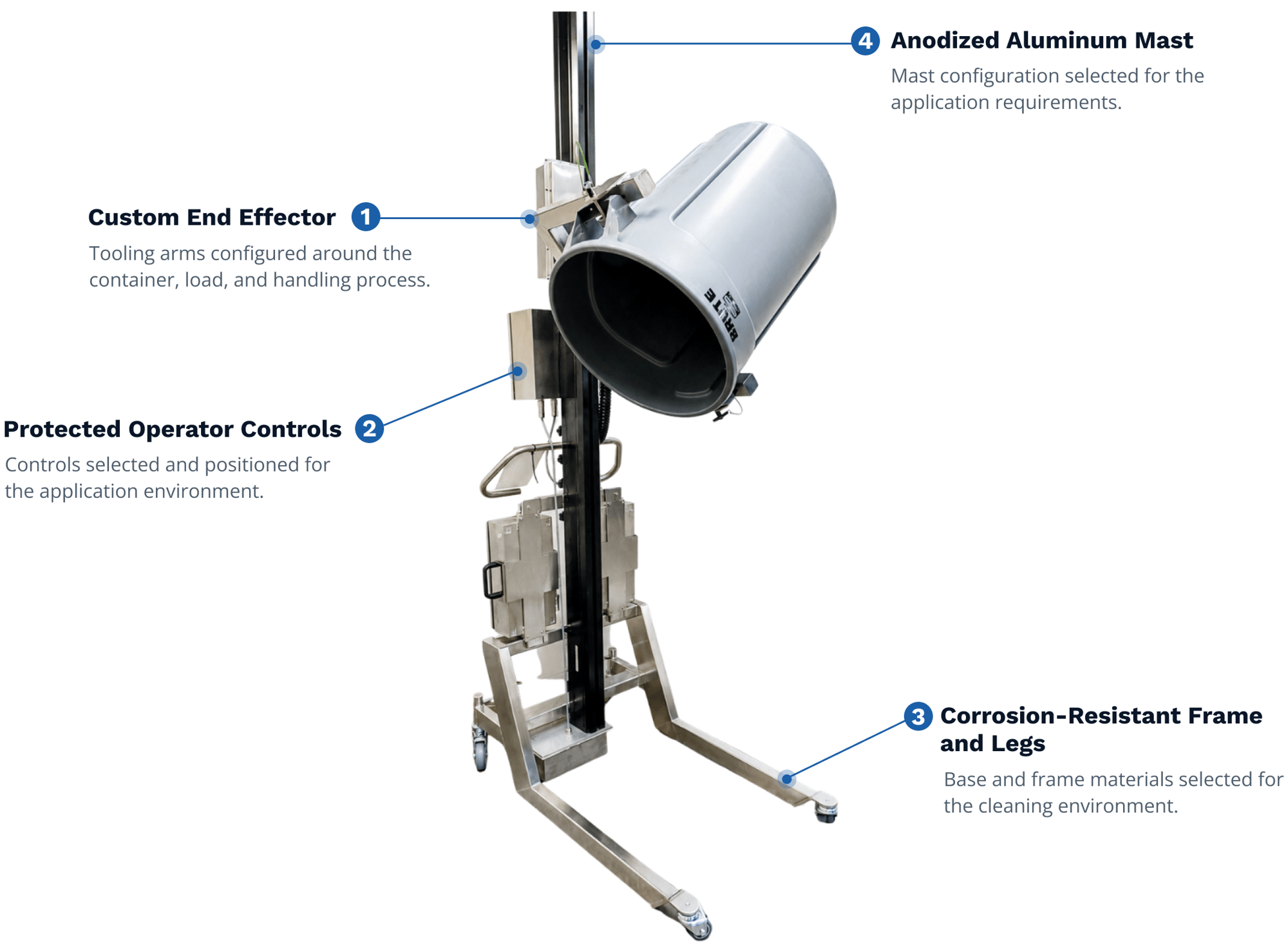
Frame, Mast, and Drive Configurations
- Anodized Aluminum and Stainless-Steel Options: Depending on the application, RonI can incorporate anodized aluminum mast profiles, stainless-steel components, or a combination of corrosion-resistant materials. Material selection is based on the load, cleaning process, chemical exposure, and operating environment.
- Protected Lift-Drive Components: Lift-drive components may be enclosed or positioned within the mast to reduce exposure and simplify cleaning. The appropriate drive design and level of protection depend on the equipment configuration and sanitation process.
- Mechanical Overload Protection: Equipment incorporates a mechanical slip-clutch or other protective feature designed to limit force if the lifting carriage encounters an obstruction. Available safety and overload features vary by equipment configuration.
Electrical and Control Components
- Protected Electrical Components: Electrical enclosures, controls, batteries, and connection points can be selected and positioned based on the equipment configuration, cleaning process, and anticipated level of exposure.
- Application-Specific Controls: Motion and operator controls are configured around the lifting function, load, workflow, operating requirements, and cleaning environment. Depending on the application, controls may include protected pushbuttons, handles, pendants, or other interfaces selected for accessibility and ease of operation.
Mobility and Caster Configurations
- Corrosion-Resistant Caster Options: Depending on the application, caster materials, wheel types, bearings, and mounting components can be selected based on the load, floor conditions, cleaning process, and operating environment.
- Three-Position Central Braking System: The foot-operated central braking system provides free-wheeling, directional tracking, and total-lock positions to support maneuvering and controlled positioning.
End Effectors and Application-Specific Tooling
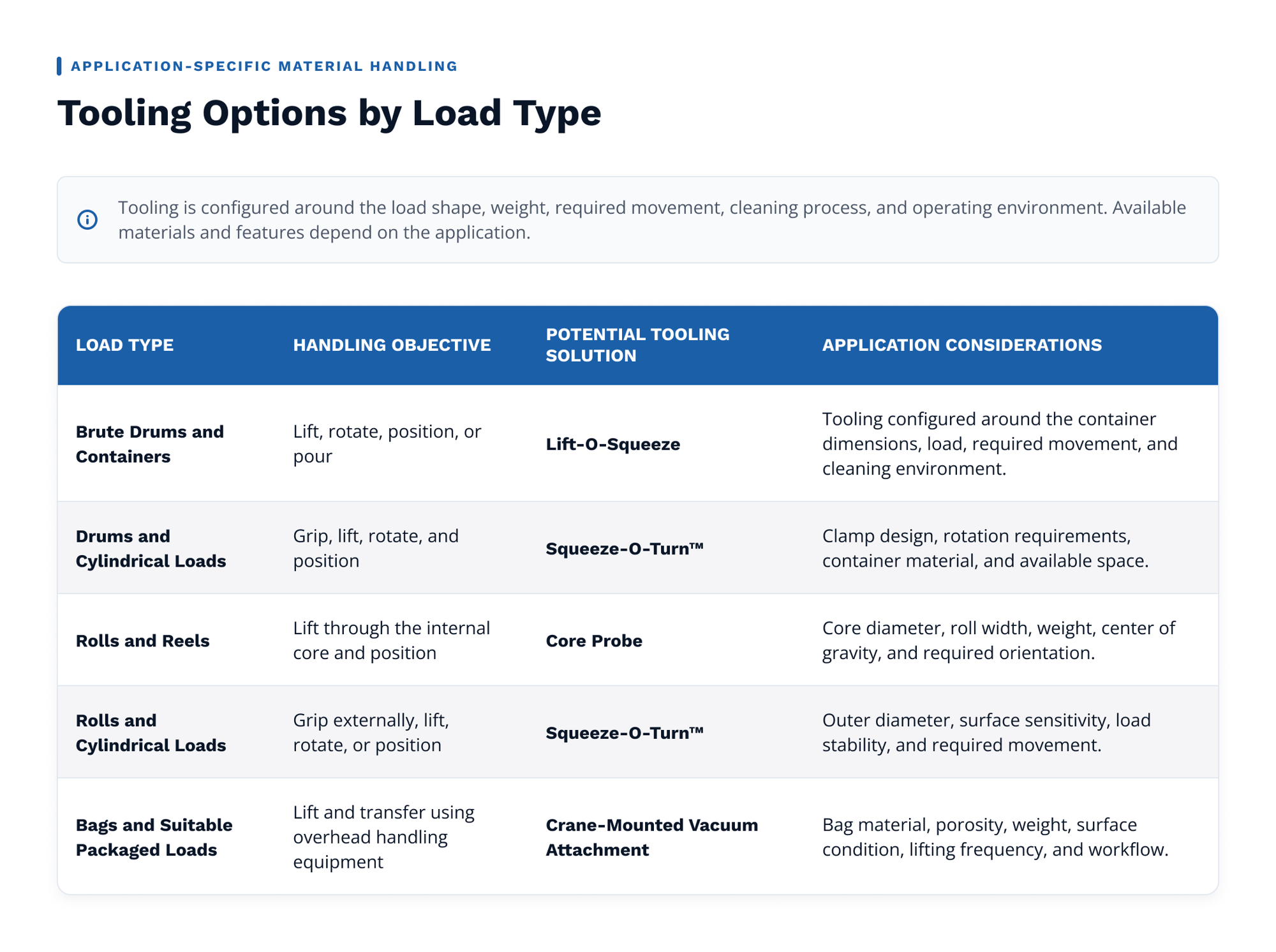
A material handling lifter is only as effective as its interface with the load. RonI designs and configures end effectors around the container, load shape, required movement, and operating workflow.
Material Compatibility Considerations
Material and seal selection can affect equipment durability in wet and chemically cleaned environments. Compatibility should be evaluated based on the specific cleaning agents, concentrations, temperatures, exposure duration, and sanitation procedures used at the facility.
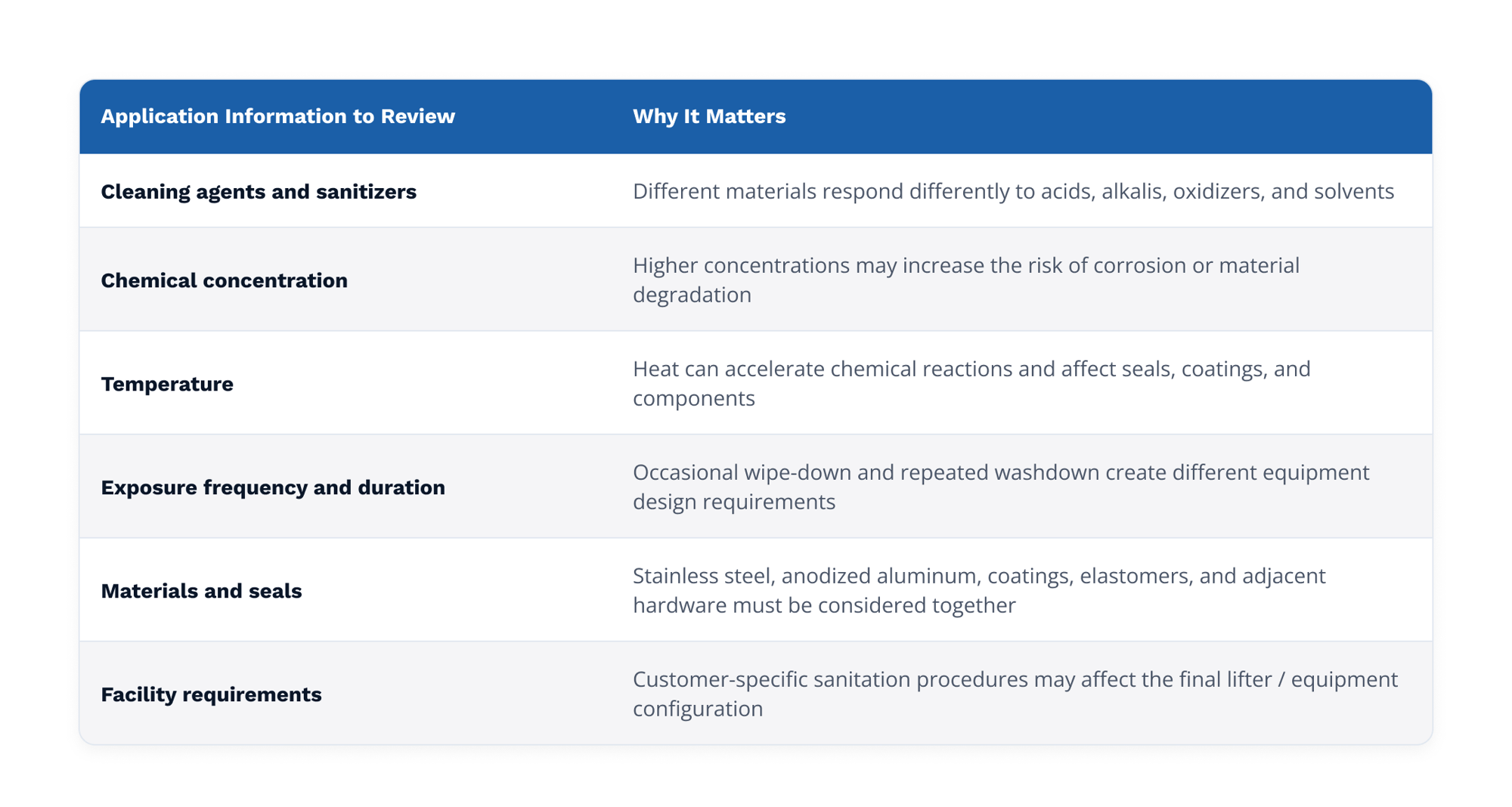
Final material and seal selections are application-specific and should be based on the customer’s cleaning agents, concentrations, temperatures, exposure conditions, and sanitation procedures. References to material compatibility do not constitute a universal performance guarantee.
Standard, Washdown, and Wipe-Down Configurations
Material handling equipment should be configured around the operating environment, cleaning process, load, workflow, and facility requirements. The comparison below highlights general design considerations that may vary by application.
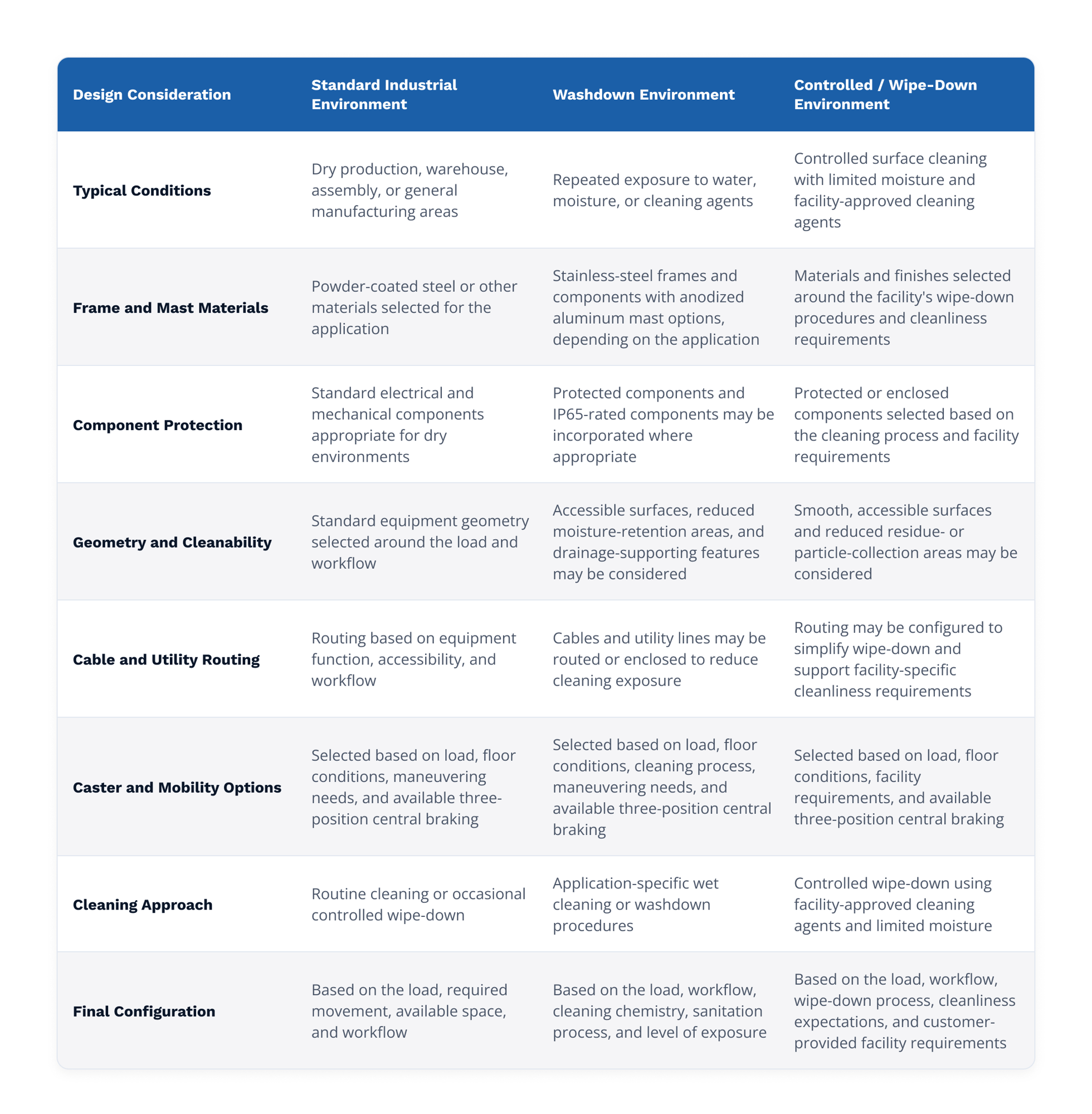
These are general design considerations, not fixed equipment tiers. Final configurations are application-specific. References to IP65 apply only to the specific rated components incorporated into a configuration and do not indicate that the complete equipment assembly is IP65-rated.
Evaluating Total Cost of Ownership
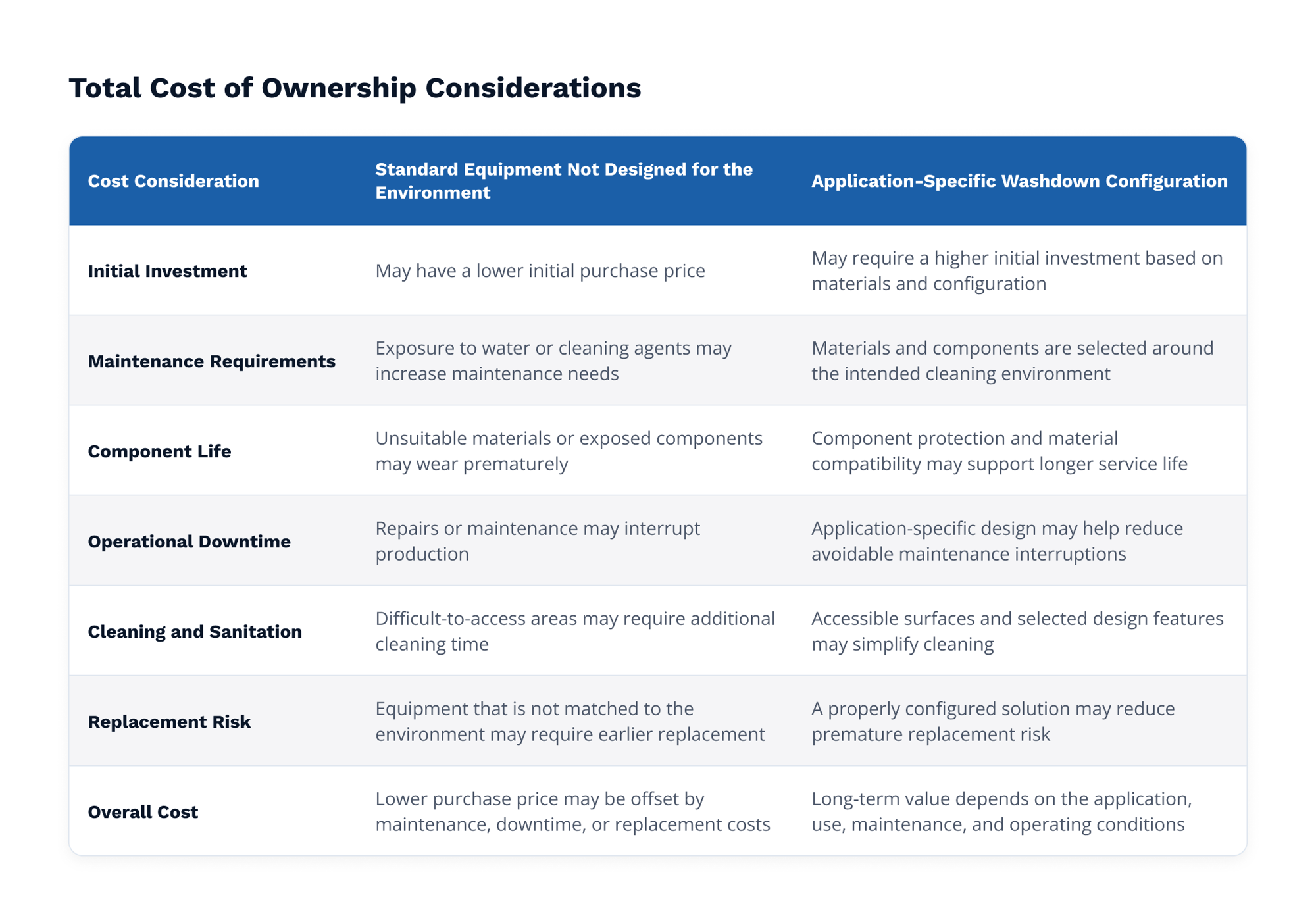
Initial purchase price is only one factor when evaluating material handling equipment for wet or frequently cleaned environments. Maintenance requirements, component replacement, downtime, cleaning demands, and equipment service life can all affect the long-term cost of a solution.
The RonI Custom Engineering Workflow: From Application Review to Delivery
RonI follows an application-driven process to develop equipment around the load, workflow, available space, and operating environment. After the application has been reviewed and the approval drawing has been approved, the typical production lead time is 12–14 weeks.
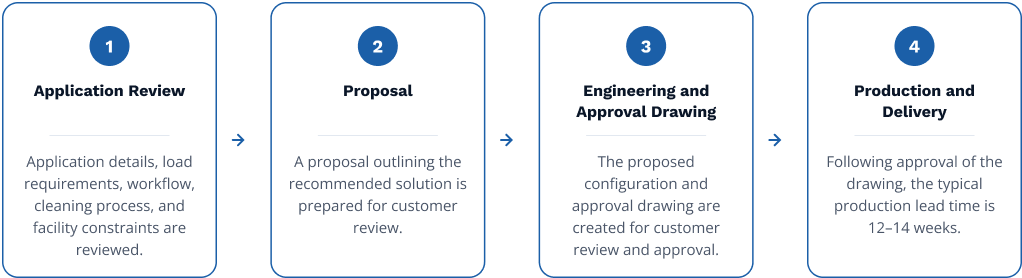
Step 1: Application Audit Review
RonI reviews the application with the customer to understand the load, required movement, workflow, cleaning process, and facility constraints.
- Load and Handling Requirements: Container dimensions, weight, center of gravity, and required movements such as lifting, rotating, tilting, or pouring.
- Cleaning and Environmental Conditions: Cleaning methods, water or chemical exposure, sanitation frequency, and any customer-specified component-protection requirements.
- Space and Workflow Constraints: Doorways, aisle widths, ceiling height, floor conditions, pickup and placement points, and available operating space.
Step 2: Proposal
Based on the application review, RonI prepares a proposal outlining the recommended equipment configuration, scope, and pricing for customer review.
- Recommended Configuration: The proposal identifies the proposed lifter, tooling approach, load capacity, required movements, and key application considerations.
- Scope and Commercial Details: Pricing, estimated lead time, exclusions, and other project-specific terms are documented for review.
- Customer Review: Questions, clarifications, or requested changes are addressed before the project moves into the approval-drawing stage.
Step 3: Engineering and Approval Drawing
After the proposal is accepted, RonI designs the equipment configuration and approval drawing for customer review.
- Equipment Configuration: Proven modular components are configured around the load, required movement, workflow, available space, and operating environment.
- Custom Tooling Design: The end effector and handling features are developed around the container or load shape and the required lifting, rotating, tilting, or positioning functions.
- Approval Drawing: The drawing documents key dimensions, capacities, tooling, and equipment features for customer review and approval before production begins.
- Customer Revisions and Approval: Questions or requested changes are addressed before the drawing is finalized and released for production.
Step 4: Production and Delivery
Following approval of the drawing, RonI releases the equipment for production. The typical production lead time is 12–14 weeks.
- Fabrication and Assembly: The approved equipment configuration is manufactured and assembled using the materials, components, and tooling specified for the application.
- Testing and Final Review: The completed equipment is inspected and functionally tested before shipment. Additional testing may be completed when included in the project scope.
- Delivery and Support: Equipment is prepared for delivery with applicable documentation and operating information. Installation or training support may be provided when included in the proposal.
Preventive Maintenance and Cleaning Considerations
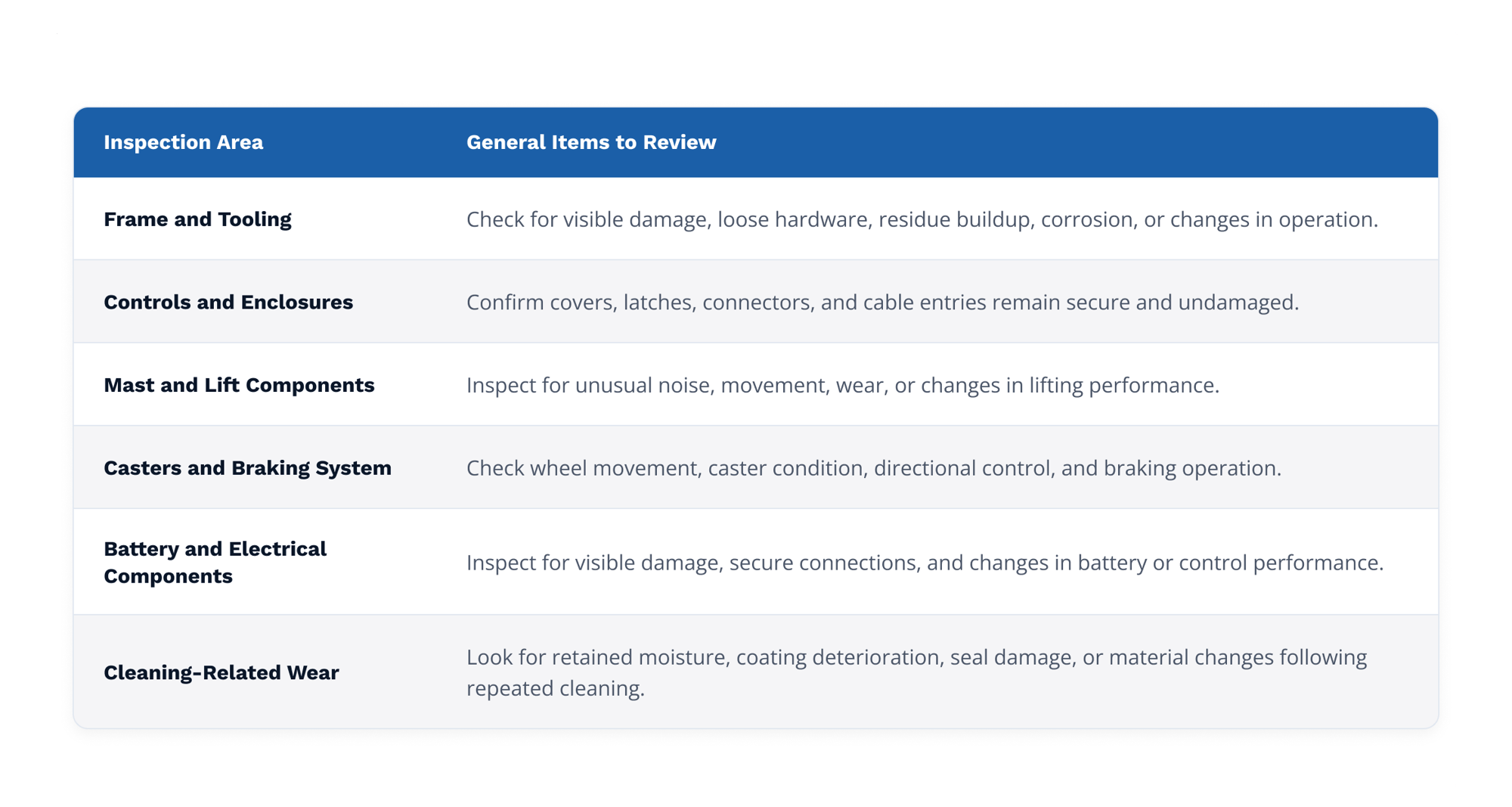
Regular inspection, cleaning, and preventive maintenance can help support long-term equipment performance. Cleaning procedures should follow the equipment documentation, facility requirements, and recommendations provided for the specific configuration.
Operational Cleaning Practices
- Review the Equipment Documentation: Follow the cleaning, inspection, and maintenance instructions provided for the specific equipment configuration.
- Inspect Components Before Cleaning: Confirm that covers, enclosures, cable entries, connectors, and other protected components are properly secured before beginning the facility’s approved cleaning process.
- Use Appropriate Cleaning Methods: Avoid directing concentrated spray at electrical connections, seals, controls, or other sensitive components unless the equipment documentation specifically permits it.
- Confirm Chemical Compatibility: Use cleaning agents, concentrations, temperatures, and contact times that are appropriate for the equipment materials, seals, finishes, and components.
- Inspect After Cleaning: Check for retained moisture, residue, corrosion, coating damage, loose hardware, or changes in equipment operation.
- Follow the Maintenance Schedule: Complete lubrication, adjustment, inspection, and replacement activities according to the equipment documentation and operating conditions.
Cleaning and maintenance requirements vary by equipment configuration. Facility sanitation procedures should be reviewed against the documentation supplied with the equipment.
Equipment Inspection Areas
Custom Engineering Case Studies
Challenge: A refrigerated foods manufacturer needed a safer, more ergonomic way to handle polyester/polyethylene film rolls weighing up to 350–400 lbs. The equipment also needed to support repeated use in a washdown food-production environment.
The RonI Solution: RonI provided a LIFT-O-FLEX® 19500 Series Washdown Lifter with a custom Squeeze-O-Turn™ attachment. The system was configured to lift, rotate, transport, and position rolls at multiple machine-loading heights.
Results: The solution reduced manual handling of heavy rolls, improved ergonomics during transport and positioning, supported more controlled roll placement, and provided a washdown-compatible configuration suited to the customer’s production environment.
Challenge: A new consumer goods processing facility needed an ergonomic solution for frequently lifting, positioning, and placing bags weighing up to 50 lbs. The system also had to meet the facility’s Class I, Division 1 requirements, support washdown and sanitation needs, and operate within limited floor space.
The RonI Solution: RonI engineered a dust-rated Vacuhand vacuum tube lifting system integrated with a fixed stainless-steel crane and articulating MOBI-Arm. The configuration included an oval suction foot for bag handling and provided the overhead reach needed to serve the work area.
Results: The system reduced manual lifting strain, enabled one-operator bag handling, improved control and consistency during placement, provided flexible coverage across multiple workstations, all while being designed to maintain compliance with the facility’s hazardous-area requirements.
Challenge: A pharmaceutical manufacturer needed a safer, more ergonomic way to lift, transport, rotate, and dump fiber and tapered plastic drums weighing approximately 187–220 lbs. The drums had to be emptied into a machine at a drop-off height of about 45 inches, while the equipment also needed to support the facility’s clean production and washdown requirements.
The RonI Solution: RonI provided a LIFT-O-FLEX® 19000 Series Wash Down Lifter with electric rotation and custom Lift-O-Turn tooling. The configuration included a custom load platform for floor-level loading and an extended drum support designed to stabilize the container during lifting, rotation, and dumping.
Results: The proposed solution reduced the physical strain associated with manually handling heavy drums, improved operator control during transport and dumping, and supported controlled discharge at the required machine height. The custom tooling also accommodated both fiber drums and tapered plastic drums while providing a washdown-compatible option for the pharmaceutical production environment.
Work with RonI's Sales Engineering Team
RonI combines proven modular components with application-specific engineering to develop material handling solutions around the load, workflow, available space, cleaning process, and operating environment.
Ready to Engineer Your Washdown Lifter Solution?
Share your load details, cleaning process, workflow, and facility requirements with our sales engineering team.