Navigating Hygiene Standards
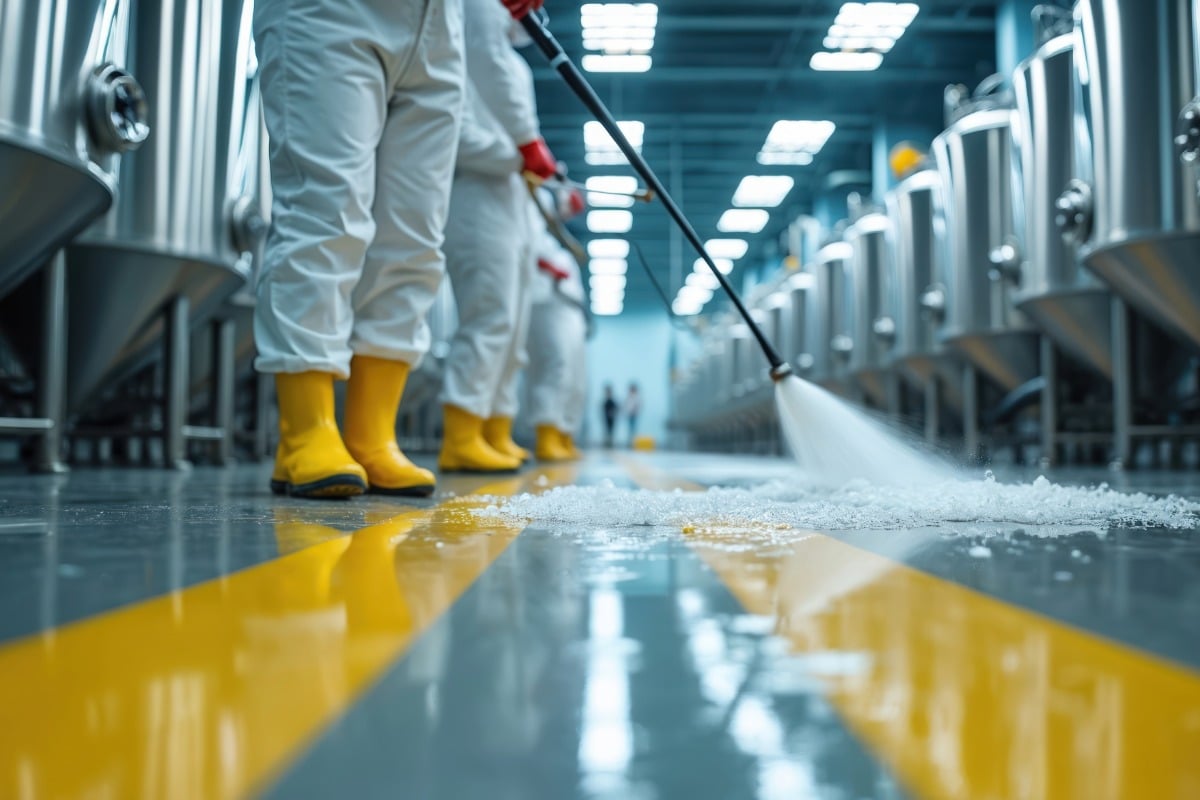
Facility directors in pharmaceutical, food & beverage, and chemical manufacturing face a dual mandate that often feels contradictory.
They need equipment strong enough to handle demanding loads while also being designed with washdown-compatible materials and features that support cleaner, more hygienic operations.
In hygiene-sensitive environments, the right lifting equipment must balance industrial performance with design features that support routine cleaning and washdown practices.
The Intersection of Heavy-Duty and Hygienic
Historically, heavy-duty material handling equipment has been designed primarily for strength, often using bulky structures and components that can be more difficult to clean in washdown environments.
Features such as bolted joints and exposed threading may allow water, debris, or residue to collect, creating additional cleaning challenges in hygiene-sensitive facilities.
Washdown-compatible lifting equipment helps reduce these challenges by incorporating materials and design features that better support routine cleaning, while still maintaining the strength and stability required for demanding lifting applications.
Design Principles for Washdown Environments
At RonI, our approach to heavy-duty performance in wet environments focuses on washdown-compatible materials and practical design features that support routine cleaning.
Our washdown-compatible lifters can be configured with stainless steel components and an anodized aluminum mast, providing durability for facilities where moisture, cleaning, and corrosion resistance are important considerations.
Design details such as welded legs and smooth surfaces support cleaner operation and easier washdown practices.
By combining lifting strength with materials and design choices suited for wet environments, RonI helps facilities improve material handling efficiency while supporting their internal cleanliness and sanitation processes.
Supporting Cleaner Operations and Worker Safety
Ultimately, washdown-compatible equipment is about supporting safer, cleaner, and more efficient operations.
A durable lifter designed with stainless steel components, an anodized aluminum mast, and washdown-compatible features can help facilities reduce cleaning challenges and better support their internal sanitation practices.
At the same time, custom ergonomic tooling can help reduce the strain of manually handling heavy loads, especially in wet or slippery environments where repetitive lifting, positioning, and maneuvering can create added risk for workers.
Conclusion
You shouldn’t have to choose between industrial lifting capacity and equipment designed for washdown-friendly environments.
The right engineering partner can help you find a lifting solution that supports demanding material handling requirements while aligning with the cleaning practices of hygiene-sensitive facilities.